

At this year’s Oxford Real Farming Conference, Mark Davis, CPSP’s Director for Agriculture and Regulatory Outreach, shares his reflections on why pesticide use continues to rise globally, and what it will take to shift towards safer, more sustainable alternatives.
Photo by jittawit.21 from Adobe Stock
The Oxford Real Farming Conference: rethinking ‘conventional’ farming
In the depths of an English winter, bring together around 2000 farmers, researchers, activists and practitioners who share an interest in sustainable farming and food systems, mix well across 19 meeting rooms in nine locations in Oxford and you have a recipe for a dynamic, stimulating, energetic event that will generate discussion, ideas and sometimes even dissent.
This is the Oxford Real Farming Conference (ORFC) that has been running since 2010 to advance real food and farming as an alternative to ‘conventional’ farming.
But as someone asked at this year’s conference, what is conventional about dousing crops with chemicals and genetically engineering crops to require more chemicals to be used on them?
Why is it conventional to compress the soil with heavy machinery and to replace well-adapted traditional varieties of crops with hybridised uniform varieties that need multiple external inputs to thrive?
Over the two days of the Conference, sessions explored any and every aspect of farming and food, with a strong emphasis on environmental and social sustainability.
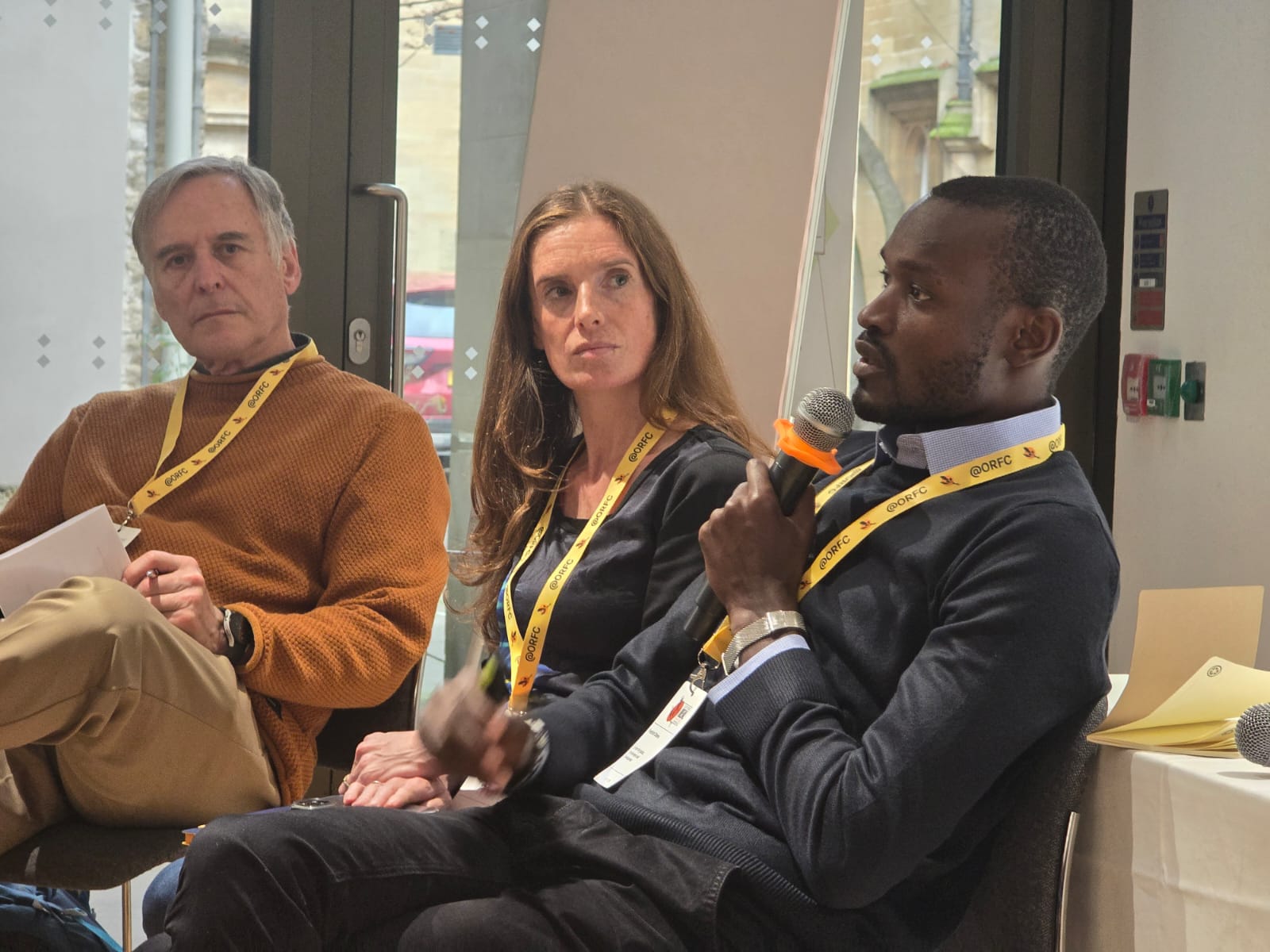
Our colleagues Mark Davis, May van Schalkwyk and Fredrick Otieno at ORFC. Photo credit: Elaine Acosta
Breaking the pesticide treadmill: global risks and industry tactics
Into this mix, CPSP introduced a session on Politics, Profits, And Pests: Breaking The Pesticide Treadmill.
We wanted to inform the ORFC audience that despite the overwhelming enthusiasm for progressive, nature-based, regenerative and ecological agricultural production systems at the conference, pesticide use around the world continues to grow and so do the problems associated with it.
May van Schalkwyk, CPSP’s lead on Commercial Determinants of Health, set the scene by explaining how the pesticide industry uses precisely the same tactics as other industries, such as the tobacco, oil, alcohol and baby-milk formula, to distort science, introduce doubt, frame the narrative and influence policy to expand and extend the markets for products that are known to be harmful.
We can learn from the evidence base for how to counter such strategies.
Achieving the policy changes needed to prevent human and environmental harms from pesticides will involve protecting science, policy-making and public knowledge from undue influence by the pesticide industry.
The global pesticide problem: Africa and Latin America
Fredrick Otieno, our partner from the Centre for Environmental Justice and Development (CEJAD) in Kenya proved the point by showing that pesticide sales are growing in Africa as a result of aggressive industry tactics.
At the same time, cases of human and wildlife poisoning from pesticides are rising, and food insecurity in Africa remains high, but this is more likely due to poor access to food rather than low productivity.
Fredrick’s message was clear: public investment in agroecology (alternatives to chemical pesticides) and research and extension services that support farmers’ needs should be bolstered, while Highly Hazardous Pesticides (HHPs) should be phased out, and exports of banned products from OECD countries must stop.
In Latin America, the situation is similar.
Elaine Acosta, CPSP’s Consultant in Latin America, highlighted that’s some countries in the region are among the highest users of pesticides per capita, or per unit of land in the world.
The continued use of HHPs in many countries is bringing about huge numbers of deaths through self-harm and accidents and high levels of chronic illness that are commonly associated with pesticide use in agricultural communities.
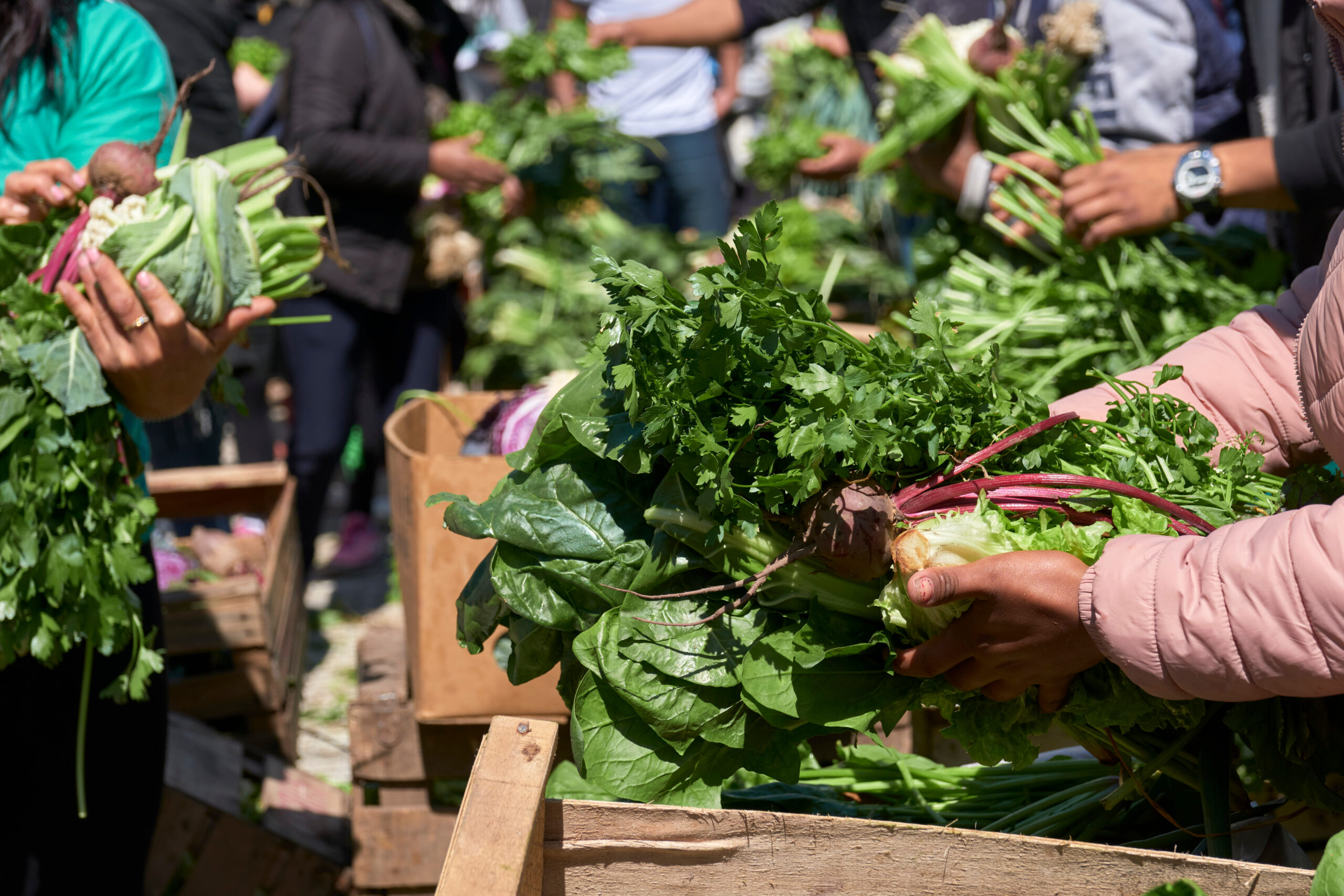
People arranging and holding bunches of fresh agroecological organic vegetables from healthy and sustainable agriculture. Photo from Adobe Stock. Credit: Carolina Jaramillo
Shared solutions and priorities
Elaine’s recommendations and the drivers for her work in the region mirrored those made by Fredrick for Africa: Remove HHPs from use, promote agroecological pest management approaches and strengthen public advisory services to farmers.
A UK farmer’s perspective on pesticide dependence
Since ORFC is a UK-based conference, we also wanted to hear from a UK farmer about their experiences in dealing with harmful pesticides.
Peter Lundgren, a farmer in Lincolnshire, explained the multiple reasons why farmers choose to use pesticides, even when they might not be needed.
Farmers are risk-averse, lack the confidence to change practices, succumb to pressure to produce a perfect-looking crop, and their advice often comes from company-related agents.
Meanwhile, farmers are also conscious of the high and rising costs of pesticides, their tight margins and static yields as well as biodiversity losses and public pressure to reduce pesticide use.
These drivers, supported by better structured agronomic advice and research programmes could help farmers to significantly reduce their reliance on pesticides.
Global policy frameworks — managing risks isn’t enough
To round off the session, Keith Tyrell, CPSP’s Head of Global Strategy, explained what is happening internationally, with the Rotterdam and Stockholm Conventions, the Global Chemicals Framework and the Convention on Biological Diversity calling for risk reduction from pesticides.
But managing risk through legal, technical and behavioural adjustment has consistently proven to be ineffective.
The only effective risk-reduction measure is to eliminate the use of harmful pesticides and replace them with different, ideally non-chemical pest management options.
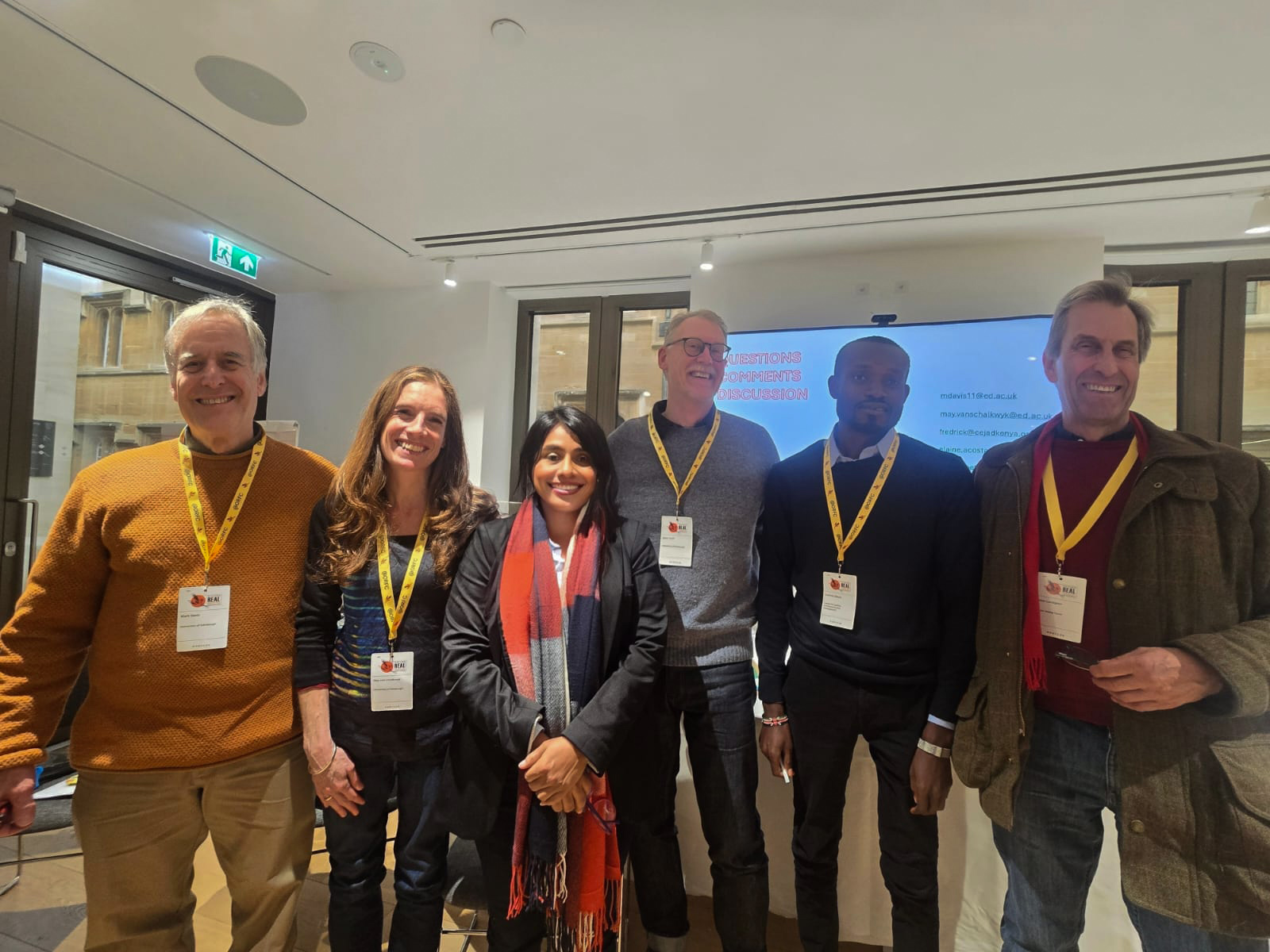
CPSP colleagues with partners at the Oxford Real Farming Conference. (L-R Mark Davis, May van Schalkwyk, Elaine Acosta, Keith Tyrell, Fredrick Otieno & Peter Lundgren
And finally: what we took away
We may have tried to squeeze too much into an 80-minute session at ORFC, but we had a lot to say, and the audience appreciated the breadth of input.
We hope that we conveyed a message supporting sustainable, ecologically based agricultural practices, while emphasising that nationally and globally, there is some way to go before we can say that we have eliminated the risks from pesticides to people, biodiversity, agricultural productivity and sustainability.
